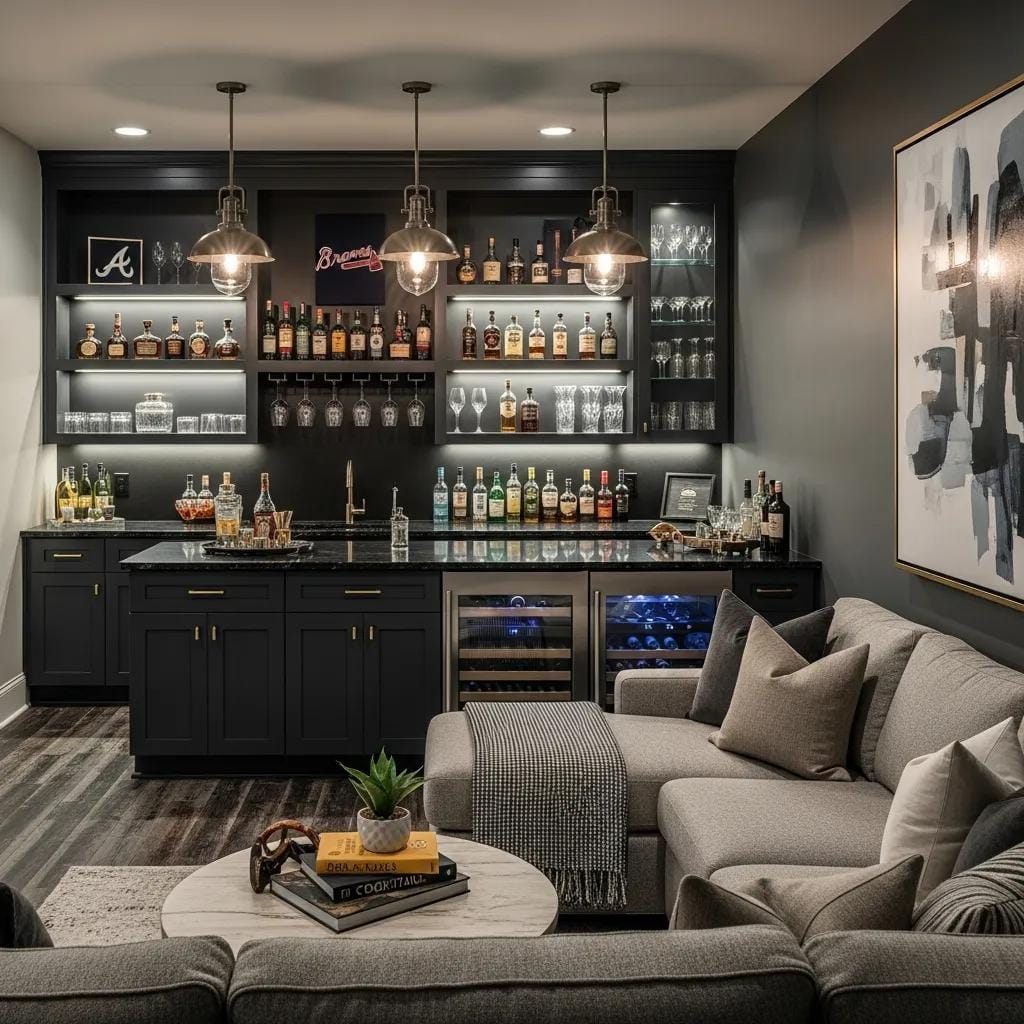
Transforming your Atlanta basement into a stylish bar and entertainment area is a smart way to maximize square footage and create a dedicated hub for hosting friends, watching the game, or relaxing with family. From sleek wet bars and custom wine storage to cozy theater seating and game tables, a well-designed basement escape adds significant value and versatility to your home.
This blog post explores innovative basement bar and entertainment design ideas tailored for Atlanta homes, helping you create a functional, inviting, and impressive retreat that reflects your personal style.
Basement Bar & Entertainment Design Ideas Worth the Upgrade
What Are The Best Custom Basement Bar Designs For Atlanta Homes?
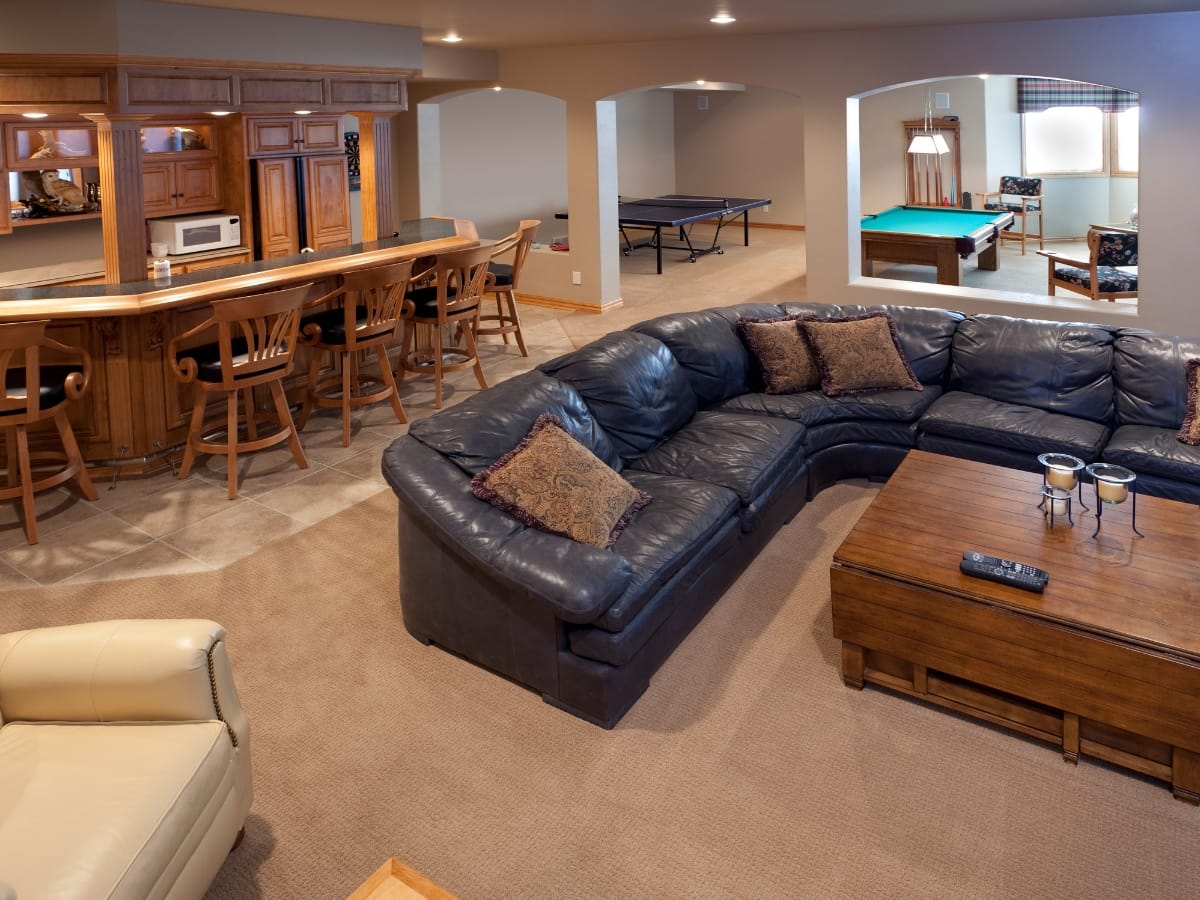
A custom basement bar can turn unused square footage into a space that feels built for your lifestyle, whether that means entertaining friends, hosting game nights, or simply having a dedicated spot to unwind. When you start collecting design ideas, it helps to think about how the bar should function first, then how it should look. Atlanta homes range from modern builds to older traditional layouts, so the best basement bar designs tend to be the ones that match the home’s style while still feeling like a natural extension of the space.
The most successful bars also account for the realities of basements, including lower ceilings, limited natural light, and the need for moisture control. With the right layout and finishes, a basement bar can feel intentional and comfortable rather than like an add-on. A strong set of design ideas will balance style, storage, lighting, and flow.
Which Basement Bar Styles Suit Atlanta Homes: Modern, Rustic, And Traditional?
Modern basement bars work well in homes with clean architectural lines and open layouts. These bars typically use simple cabinetry, smooth countertop materials, and streamlined hardware. A modern setup often focuses on contrast, such as dark cabinets paired with a lighter counter, and it relies on lighting to create a polished look. If you want design ideas that feel current, consider integrated under-cabinet lighting, floating shelves for glassware, and a mix of matte and reflective surfaces to brighten the room.
Rustic basement bars lean into texture and warmth, which can make a basement feel more inviting. This style often uses wood beams, stone accents, or reclaimed materials that give the space character. Rustic design ideas can include a wood bar top with a durable seal, open shelving with wrought iron brackets, or a brick or stone backsplash that adds depth. This approach can be especially appealing if the rest of the home has farmhouse touches or traditional finishes.
Traditional basement bars are a good fit for homeowners who want a timeless look that blends easily with classic interiors. Rich wood tones, raised-panel cabinetry, and more detailed trim work are common in this style. Traditional design ideas can include glass-front cabinets for display, a built-in wine rack, and classic pendant lighting over the bar. If you want the bar to feel like it has always been part of the home, traditional styling tends to deliver that result.
What Essential Components Make Up A Functional Basement Wet Bar?
A wet bar is only as enjoyable as it is usable, so the best design ideas start with the essentials. A bar sink is the anchor of a wet bar, since it makes cleanup easier and supports basic prep. Pairing it with a compact refrigerator keeps drinks and mixers accessible without trips upstairs. An ice maker can be a smart upgrade for households that entertain often, but it is not required for every setup.
Storage is another major factor. Cabinets and drawers help keep bottles, tools, and serving items organized, while open shelves can make frequently used glassware easy to grab. If the space is tight, vertical storage becomes more important, and that is where thoughtful design ideas like stacked shelving or built-in cubbies can make the bar feel larger than it is.
Layout decisions also affect comfort. Counter height should work for both serving and seating, and there should be enough clearance behind the bar to move without feeling cramped. Seating choices matter too. Even a small overhang can make stools comfortable, which helps the bar function as a gathering point rather than just a prep station.
A great basement bar is not only about looks. It is about creating a space that works smoothly and feels cohesive. With the right design ideas, Atlanta homeowners can build a basement wet bar that feels stylish, practical, and ready for everyday use.
How To Plan And Install A Home Theater In Your Atlanta Basement?
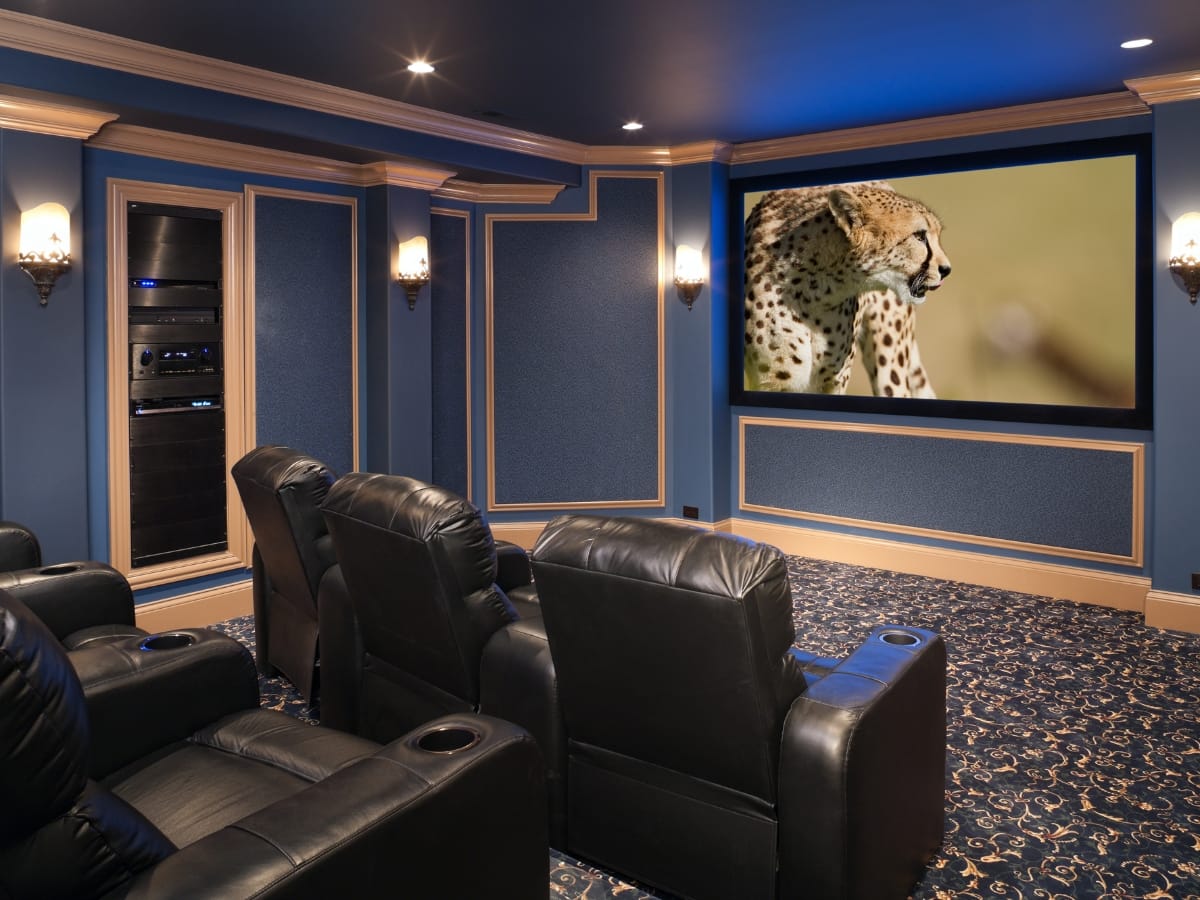
A basement is one of the best places to build a home theater because it naturally feels separate from the rest of the house. With the right plan, it can become a dedicated space for movies, sports, and gaming without disrupting daily life upstairs. The smartest design ideas focus on layout first, then equipment, then the details that make the space comfortable for long sessions. Basements have their own challenges, such as limited natural light and different acoustics than main-level rooms, but those same factors can work in your favor if you plan around them.
Before choosing a screen size or speaker package, start by thinking about how you want to use the room. A theater built for family movie nights will need different seating and lighting than a gaming-focused setup. Your best design ideas will come from matching the room to the way you actually live.
What Are The Key Home Theater Equipment And Seating Options For Basements?
The core equipment usually comes down to display, sound, and sources. Many homeowners choose either a projector or a large-screen TV, and the right answer depends on room size, viewing distance, and personal preference. A projector can create that classic theater feel, especially in a dark basement, while a TV can be a great fit for brighter spaces or mixed use rooms where you want a simple, always-ready setup.
Sound is where many basement theaters either shine or fall short. A surround sound system adds realism, but placement matters as much as the speaker brand. Speakers should be positioned to match the seating layout so dialogue stays clear and effects feel balanced. Design ideas for speaker placement often include in-wall speakers for a cleaner look or a soundbar paired with rear speakers for a simpler setup that still delivers impact. Subwoofer placement is also worth testing, since basements can amplify bass in corners.
Seating is the comfort factor that changes how the room feels. Recliners create a true theater vibe, but sectionals can be better for families who want to stretch out or sit together. If your basement has a tighter footprint, a row of reclining seats may use space more efficiently than bulky couches. One of the most practical design ideas is to keep sight lines in mind so every seat has a clear view of the screen, especially if you plan to add a second row.
How Does Soundproofing And Smart Home Integration Enhance Basement Theaters?
Soundproofing is one of the upgrades that makes a basement theater feel more polished. It helps keep movie sound from bleeding into the rest of the house and reduces outside noise that can break immersion. Acoustic panels can cut down on echo and improve clarity, especially for dialogue. Insulation in walls and ceilings can also help control sound transfer, which matters if the theater sits below bedrooms or shared living spaces.
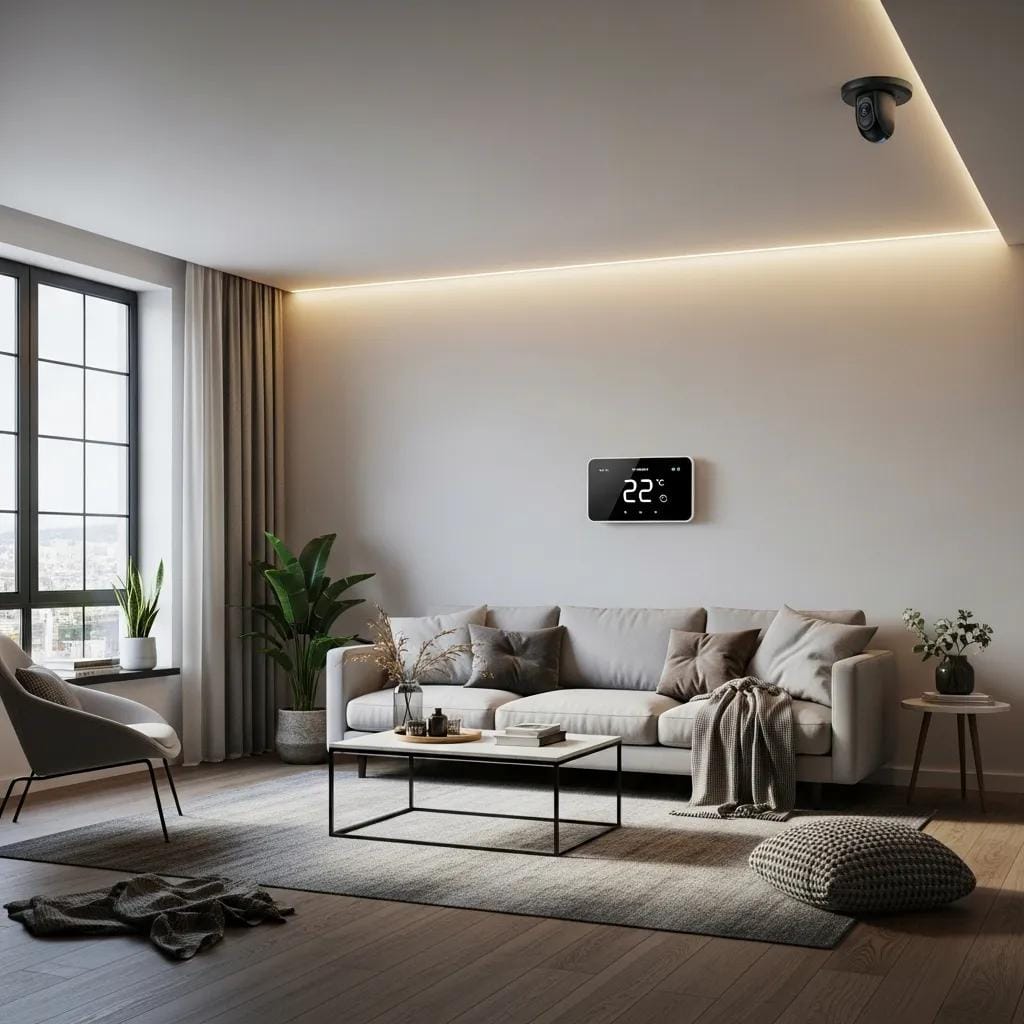
Smart home features can improve the everyday experience without making the room feel overly complicated. With the right setup, lighting, audio, and the screen can work together so the space feels easy to use. For example, dimmable lighting can shift from bright to low as the movie starts, and a single control can power on the system and set volume to a comfortable level. These design ideas are not about adding gadgets for the sake of it. They are about making the room simple enough that anyone in the household can use it without troubleshooting.
A basement theater works best when it feels intentional, comfortable, and easy to operate. With the right design ideas, you can create a space that delivers a true home theater experience while still fitting the layout and style of an Atlanta home.
Basement Entertainment Space Renovation Costs in Atlanta
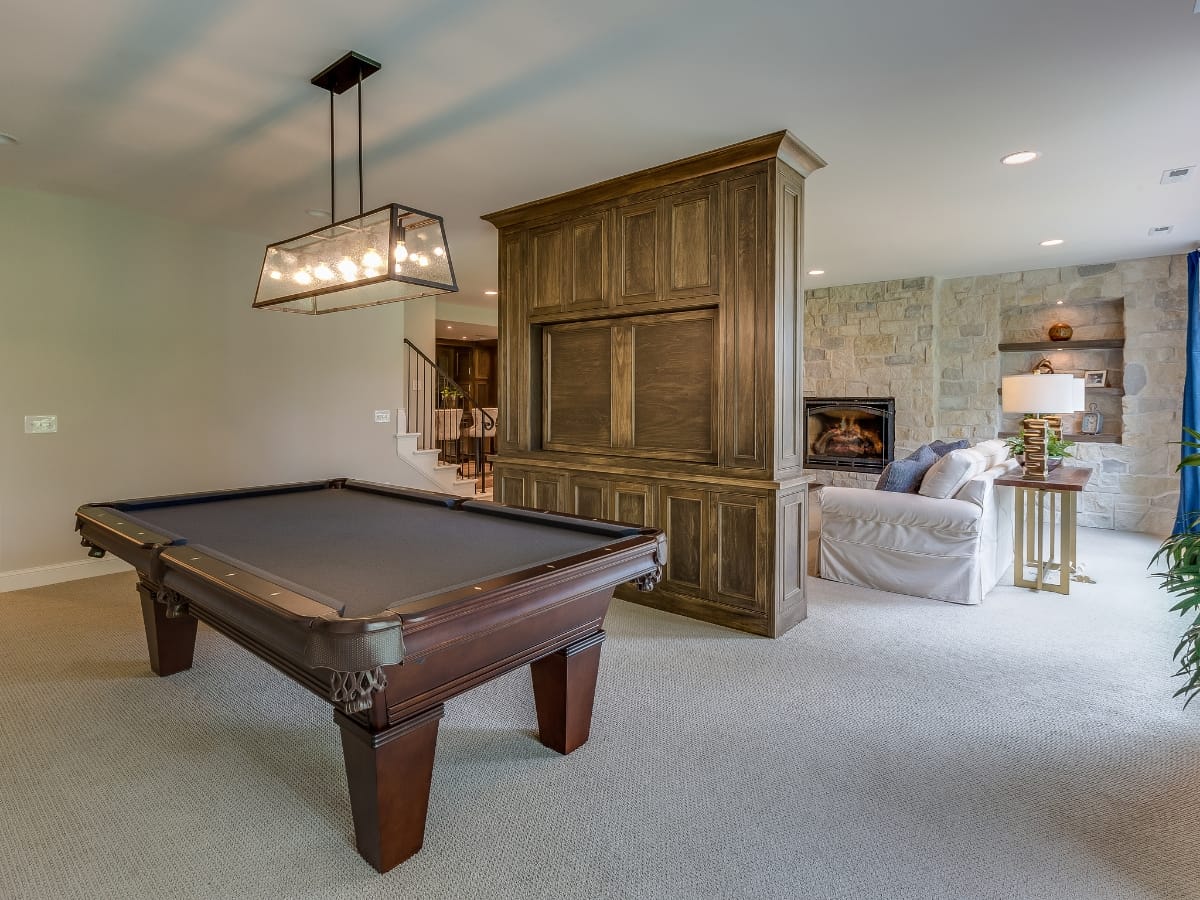
Renovating a basement into an entertainment space can be one of the most rewarding home upgrades because it adds usable living area without changing the home’s footprint. Costs, however, can vary widely depending on how finished the basement already is and how ambitious your plans are. The best approach is to treat budgeting as part of your design ideas process, not something you figure out at the end. When you map out the layout, finishes, and features early, it becomes much easier to align the final result with what you actually want to spend.
A basic entertainment setup in an already-finished basement is typically less expensive than a full renovation that includes framing, drywall, flooring, and major electrical updates. If the basement is unfinished, the budget has to cover both the “building the room” portion and the entertainment features. Homeowners can also run into added costs if moisture mitigation, drainage, or insulation upgrades are needed, since those items support comfort and protect finishes over time.
Which Factors Influence The Cost Of Basement Bars And Home Theaters In Atlanta?
Several variables drive the cost of basement bars and home theaters, starting with the size of the space and the complexity of the layout. A simple bar wall with base cabinets and shelving is generally more affordable than a full wet bar that includes plumbing, a sink, and dedicated electrical for appliances. The more functional the bar becomes, the more your budget will reflect behind-the-scenes work like plumbing lines, venting, and electrical additions. When you are gathering design ideas, it helps to separate the “must-haves” from the “nice-to-haves” so you can scale the bar appropriately.
Home theaters can also range from basic to high-end. A modest setup may only require a large TV, a sound system, and comfortable seating. More advanced theater design ideas might include a projector, in-wall speakers, acoustic treatment, custom lighting, and built-in cabinetry to hide equipment. Those upgrades improve the experience, but they also increase labor and material costs, especially when wiring and speaker placement require opening walls or ceilings.
Finishes are another major cost driver. Flooring, trim work, lighting, and built-ins can change the look and feel of the space dramatically, but they also affect the total budget. Higher-end finishes tend to add cost quickly, while well-chosen mid-range materials can still create a polished look. Labor costs matter too, especially when the project involves multiple trades. A basement entertainment renovation often requires coordination across framing, electrical, plumbing, flooring, and finishing work, which can add time and complexity.
How Does Investing In Basement Renovations Impact Atlanta Home Value?
A well-executed basement renovation can increase home value because it adds finished living space and improves how the home functions. In Atlanta, where buyers often compare homes by livable square footage and flexibility, a finished basement that works as an entertainment zone can stand out. It appeals to buyers who want extra room for hosting, hobbies, or family movie nights without sacrificing upstairs living areas.
The value impact usually depends on how well the renovation feels connected to the rest of the home. Design ideas that prioritize flow, lighting, and practical storage tend to perform better than overly niche setups. A basement bar or theater can be a selling point, but buyers generally respond best when the space still feels flexible. If the room can function as an entertainment area now and a multipurpose living space later, it tends to broaden its appeal.
Ultimately, budgeting and value go hand in hand. The strongest design ideas are the ones that create a comfortable, finished space that looks intentional, functions well, and fits the overall style of the home. That is what makes the renovation enjoyable now and attractive later.
What Are Popular Basement Entertainment Space Ideas Beyond Bars and Theaters?
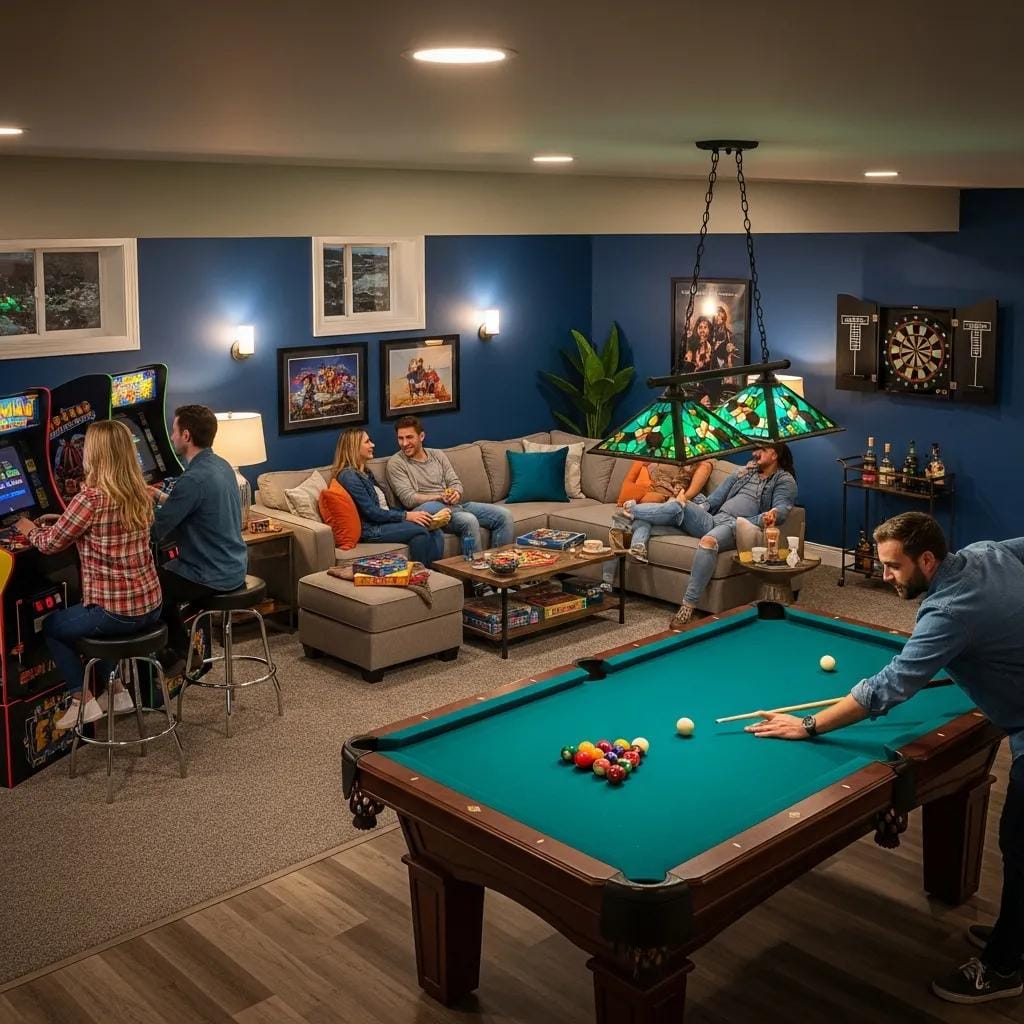
Basements are often the most flexible part of a home, which makes them a great place to build an entertainment space that goes beyond the usual bar or theater setup. With the right design ideas, a basement can become a game room, a lounge for hosting, a hobby space, or a mix of everything. The key is planning for how the room will be used week to week, not just how it will look in photos. When the layout supports real life, the space feels finished and comfortable rather than cluttered or oversized.
One of the most common directions homeowners take is a game-focused space. Others use basements for collections, tasting areas, or multipurpose zones that can handle different activities at once. These options work especially well when you break the basement into clear sections, even if you keep the overall design open.
How To Incorporate Game Rooms And Custom Wine Cellars In Atlanta Basements?
Game rooms are popular because they naturally create a social hub. Depending on the space, design ideas might include a pool table, a dartboard area, a card table, or a corner for arcade-style games. The goal is to leave enough clearance around each activity so people are not squeezed into tight walkways. A game room also benefits from seating that supports conversation. A small lounge area with a sofa and a couple of chairs helps the room feel like a place to stay, not just a place to play.
Custom wine storage can add a more refined element, but it needs to be designed correctly. If you want a true cellar, climate control matters, since temperature and humidity affect long-term storage. Some homeowners choose a glass-enclosed wine room that doubles as a design feature, while others prefer a more discreet storage wall with racking and a small tasting table. Lighting should be soft and controlled so the space feels inviting without creating heat buildup. One of the most useful design ideas is to keep wine storage close to where people gather, such as near a lounge zone, so it feels connected to entertaining rather than tucked away.
When game rooms and wine areas share a basement, the layout should separate high-energy and low-energy zones. Placing a wine nook farther from loud games helps keep the space comfortable for everyone.
What Lighting And Layout Designs Optimize Basement Entertainment Spaces?
Lighting is one of the biggest factors in how a basement feels. Since many basements lack natural light, the most effective design ideas use multiple layers of lighting rather than relying on one overhead fixture. Ambient lighting fills the room and reduces shadows, while task lighting supports specific areas like a card table, snack counter, or reading nook. Accent lighting adds warmth and helps define zones, which is especially helpful in open layouts.
Layout planning should focus on flow. Guests should be able to move through the space without cutting directly through activity areas. This is where zoning becomes important. Even a simple layout can feel intentional when the basement has clear destinations, such as a seating area, a game area, and a storage or display area. Rugs, lighting placement, and furniture arrangement can create separation without adding walls.
Ceiling height also affects layout decisions. Lower ceilings often feel better with compact furniture and thoughtful lighting that keeps sight lines open. If the basement is larger, design ideas like built-in storage or a feature wall can help prevent the room from feeling empty or unfinished.
A basement entertainment space works best when it is designed around how people will actually use it. With practical design ideas, you can create a space that supports hosting, relaxing, and everyday enjoyment, even without leaning on a full bar or home theater setup.
Why Choose Bitwood Build For Your Atlanta Basement Renovation Project?
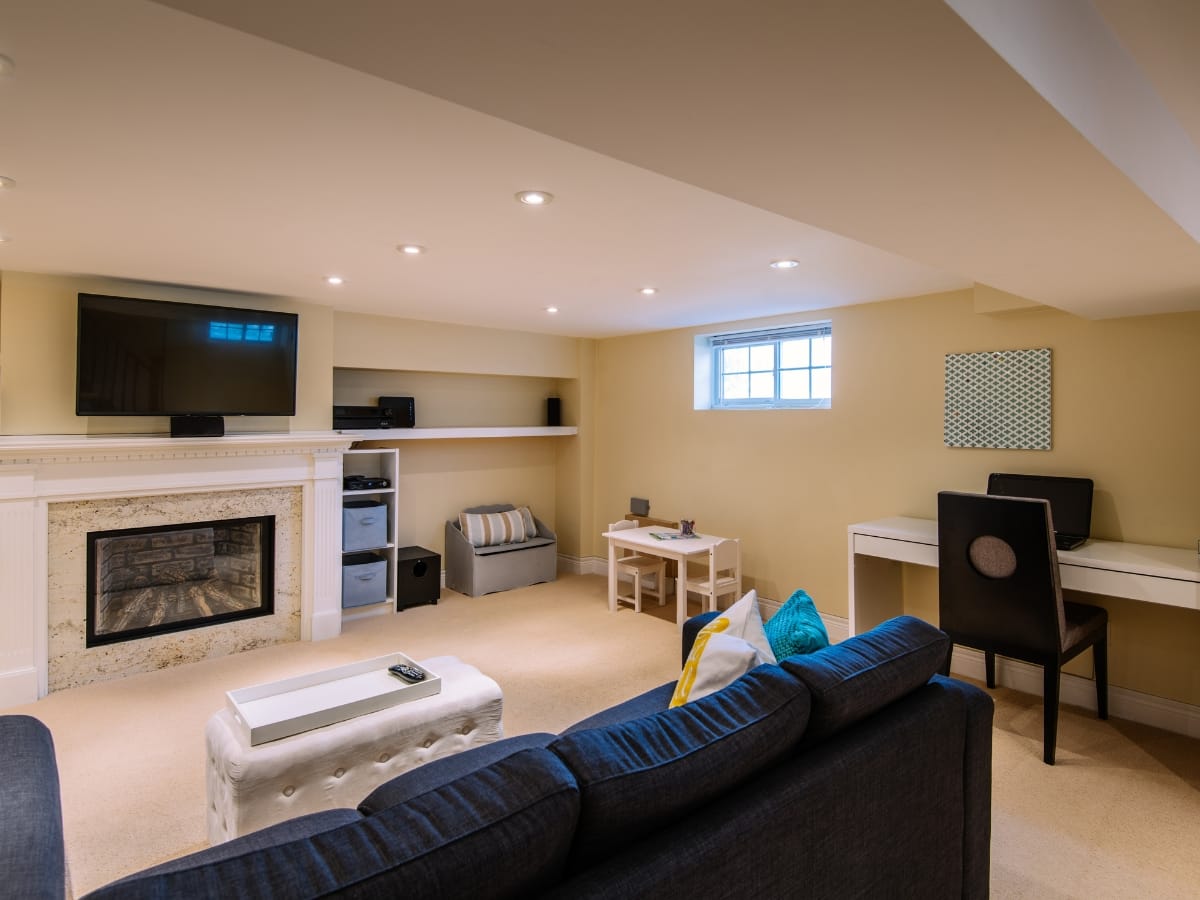
A basement renovation is one of those projects where the final result depends heavily on planning, sequencing, and quality control. It is not just about finishes. It is about making sure the space is comfortable, functional, and built in a way that holds up over time. For Atlanta homeowners collecting design ideas for an entertainment space, guest suite, game room, or flexible living area, choosing the right contractor matters as much as choosing the right layout. Bitwood Build is often selected for basement renovations because their process is structured and their work focuses on long-term quality, not quick cosmetic changes.
Basements can present unique challenges, including moisture concerns, limited light, and the need for careful electrical and HVAC planning. A contractor who understands these constraints can help you refine design ideas into a plan that fits the home and avoids costly changes later. That is where strong project management makes a real difference.
How Do Bitwood Build’s Certifications And Project Management Ensure Quality?
Bitwood Build works as a residential contractor focused on construction, remodeling, and renovations in the Greater Atlanta area. Their NARI certification and PMP credentials reflect an emphasis on professional standards and structured project oversight. For homeowners, that typically shows up as clearer timelines, better coordination between trades, and fewer surprises mid-project.
Project management matters because basement renovations often involve multiple moving parts, such as framing, electrical, plumbing, insulation, flooring, and finish work. Without coordination, even good design ideas can fall apart in execution. A plan might look great on paper, but if the electrical is not aligned with lighting design, or the layout does not account for HVAC needs, the final space can feel awkward or unfinished. A contractor with a process-driven approach helps prevent those issues by keeping each phase organized and making sure decisions are made in the right order.
Quality control also comes down to details. That includes clean installation, proper materials for below-grade environments, and making sure the space feels consistent with the rest of the home. When the build is managed carefully, the finished basement tends to feel like a true extension of the house rather than a separate zone with mismatched finishes.
What Is The Basement Renovation Process With Bitwood Build From Concept To Completion?
The renovation process typically begins with a consultation where homeowners share goals, priorities, and the design ideas they want to explore. This is where the functional plan takes shape, including how the space will be used, where storage needs to go, and what features matter most. For example, an entertainment-focused basement might require stronger sound control, flexible seating zones, and layered lighting, while a multipurpose basement might focus on open flow and durable finishes.
After the initial planning stage, the design phase translates those ideas into detailed plans. This is where layout, materials, lighting, and built-ins are selected so the project has clear direction before construction begins. Once the design is approved, construction moves forward with the renovation work completed in stages, which helps prevent rework and keeps the project moving efficiently.
A final walkthrough typically ties everything together. It ensures the space matches the plan and that finishes, function, and details are completed to the homeowner’s expectations. This step is important because basements rely on small details, such as lighting placement, outlet locations, and storage layout, to feel truly finished.
A basement renovation is a chance to add meaningful living space and bring your best design ideas to life. With a contractor that emphasizes planning, coordination, and quality, Atlanta homeowners can create a basement that looks good, works well, and adds long-term value to the home.
Conclusion
Transforming your basement into a stylish bar and entertainment area is the perfect way to add significant value and enjoyment to your Atlanta home. From custom cabinetry and sleek countertops to integrated lighting and audiovisual systems, a professional design creates a seamless, inviting space for gatherings. For expert craftsmanship that brings your vision to life, trust the skilled team at Bitwood Build. Ready to create the ultimate home entertainment hub? Call (404) 445-5424 or request a free quote through our site form today to start designing your dream basement. Let’s build a space where memories are made.